Athletic Carnivore ATHLETIC CARNIVORENUTRITION SPORT NEUROPROFIL
Stress, sleep and eating behaviour

Athletic Carnivore

Stress, sleep and eating behaviour

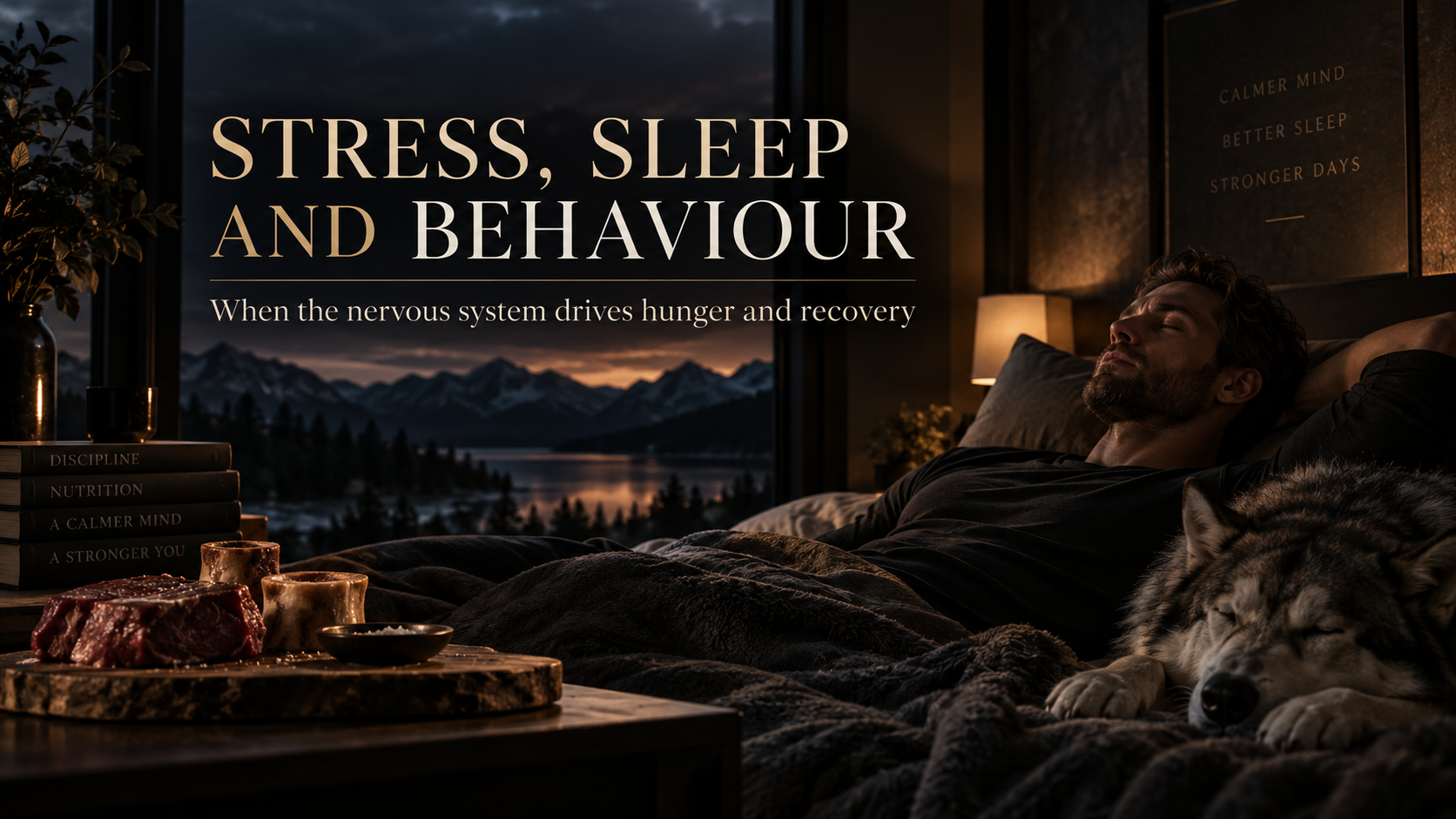
Hunger and food choices are not driven by willpower alone. Stress, sleep loss, mental load, daily rhythm and recovery can change hunger perception, cravings, frustration tolerance and the ability to stay consistent.

🧠

Nervous system

Your level of activation can influence impulsivity, perceived hunger and recovery.
🌙

Sleep

A poor night can change appetite, motivation and decision quality.

🍽️

Behaviour

A sustainable strategy accounts for context instead of relying only on discipline.

Why context changes behaviour

Sleep loss often makes food decisions more difficult.
High stress can increase cravings or temporarily suppress appetite.
Overloaded days encourage quick, less prepared decisions.
An overly restrictive diet may become harder to sustain when recovery falls.
Meal timing and satiety can influence behavioural stability.

Useful questions

  • Do cravings mostly appear in the evening or after stressful days?
  • Does sleep worsen before episodes of grazing?
  • Were earlier meals actually satiating?
  • Does the current strategy require too much mental control every day?

Build a more stable environment

Protect sleepA realistic bedtime routine can matter more than adding another food rule.
Simplify mealsSimple, satiating meals reduce the number of decisions you need to make.
Identify triggersTime of day, stress, boredom, fatigue or social context can be observed without judgement.
Adapt instead of blamingA useful strategy should reduce friction rather than demand perfect discipline all the time.
The lower recovery becomes, the simpler a good strategy needs to be.

Frequent mistakes

  • Treating every craving as a lack of willpower.
  • Adding more restriction when already tired or stressed.
  • Confusing one bad night with long-term dietary failure.
  • Looking for one single cause when several factors are interacting.

Key point

Sleep, stress and eating behaviour interact. The aim is to understand context and habits, not to diagnose a psychological or neurological disorder. The content remains educational and informational.

Want to make your strategy more stable?

Browse the other guides or book support to clarify sleep, stress, hunger, habits and daily organisation.